
Wadi Rum: The Martian Desert

The Perfect Guide for your visit to the Wadi Rum Valley in Jordan.
Wadi Rum is a protected area in southwest Jordan with an area of 720 square km. Rum has been the home of Bedouins since prehistoric times. Bedouins or the Arabic ‘Bedawi’ means ‘Desert Dwellers.' Wadi Rum Protected area (WRPA) was designated as a UNESCO World Heritage Site in 1998. The subsequent boost in tourism has propelled people to visit Rum and experience what truly encompasses Bedouin life and culture. It has also coerced the Bedouin people to be vis-a-vis with tourism and emigrate from their hunting and trading lifestyle.

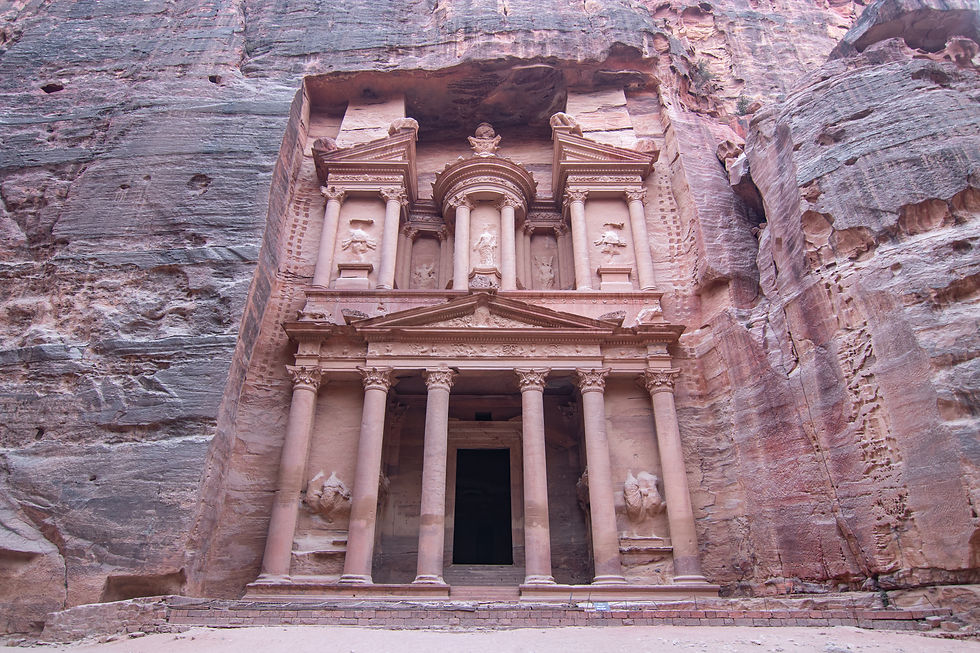
While Petra was indeed the ‘Pink City’, Wadi Rum is rightly the ‘Red Desert’.
Our final stop in this beautiful paradise of Jordan was the ‘Martian’ Wadi Rum desert. The ride to Wadi Rum was as scenic as the valley itself, to say the least, and sure to set your senses ablaze. It is a desert unlike any other.
.
How did the ‘Red Desert’ come into existence on Earth?
These landscapes have developed and evolved under the influence of varied factors viz. lithology, tectonic activities and surface processes (the weathering and erosion) for millions of years. Widespread petroglyphs, inscriptions and archaeological remains reflect the interaction of human elements with nature and depict how human civilisation adapted and evolved across centuries. You would be inspired by the sophistication in their minimalist and simple living!

How to reach?
Wadi Rum can be reached easily by main roads from Amman (3.5hrs), Aqaba (1hr) and Petra (2hrs). Most buses that travel the highway between Aqaba and Petra/Amman will land you at the intersection of Wadi Rum (except the buses from JETT).
Bus from Amman
You have JETT buses every two hourly plying between Amman and Aqaba (starting at 7 AM). But these buses do not stop at the highway intersection to Wadi Rum. You will have to get down at Aqaba and take a local bus or a taxi from Aqaba. This increases your travel time to approximately 6 hours. There are no buses from Aqaba to Wadi Rum in the morning. The bus rides would cost anywhere from 7 JD to 17 JD. And a taxi from Aqaba would cost around 20 JD to 30 JD.
Bus/ Private taxi from Petra
A minibus departs Wadi Musa everyday at 6.30 AM and the travelling time is around 2 hours. The bus ride would cost somewhere around 7 JD. A private taxi from Wadi Musa would cost you around 40 JD.
Bus/ Private taxi from Aqaba
There are a few local buses connecting Aqaba to Wadi Rum in the afternoon. There are no buses from Aqaba to Wadi Rum in the morning as mentioned before.
Personal Car
If you travel by personal car, the main route to Wadi Rum branches east off the Desert Highway about 5 km south of Quweira and 25 km north of Aqaba. From here the road extends about 30 km through the desert to end at Rum village.
Around 7 km before the Rum village lies the Visitor's centre. Once you have reached the Visitor's centre, you need to complete the necessary formalities and then proceed to the Rum village. At Rum village, there is parking located near the tourist police site and is a safe spot to leave your car.
The cost to enter the Wadi Rum Protected Area is 5 JD per person (and free with the Jordan Pass)
Best time to visit
The best time to visit is Spring (March and April) or Autumn (October and November), to avoid the cold winter nights and hot summer days although the protected area is open all year round.
Where to stay
The best place to stay would be a traditional Bedouin camp within the Wadi Rum. There are numerous campsites (ranging from low-cost to luxury options) available with the WRPA. Most of the campsites are adjacent to one or the other rock outcrops giving it an idyllic setting. You can choose your stay at Booking.com or Hostelworld.com.
How to move around
Guided tours on 4WD vehicles, camel safaris/ horseback rides and hikes (ranging from a couple of hours or half-day to a full-day tour) are available to explore the vastness of this desert landscape. Hiking, camel safaris and horseback rides allow a more immersive desert experience. But if you are short of time, the 4WD tours are your best bet (we ourselves did a 4WD tour!). Most of the campsites provide combined tour packages offering guided desert safari (must-see spots and sunset view sites), hiking, rock climbing, sand boarding, hot air balloon rides et cetera.
To have a raw desert experience staying overnight at a Bedouin camp is something you shouldn’t forego. An overnight Wadi Rum stay means you get to witness the ever-changing colours of the desert at sunset and sunrise, experience Bedouin hospitality and have unobstructed and clear views of the star-lit skies.
Top attractions
Lawrence Spring
Ain Abu Aineh is invariably the first pitstop on the guided tour. The site is about 10 km away from the Wadi Rum Visitors' Centre. An ancient spring named after T. E. Lawrence adorns this spot. He was a British archaeologist, diplomat and army officer who played a key role in the Arab revolt during WWII which earned him the moniker “Lawrence of Arabia”. He vividly depicted the place in his book 'Seven Pillars of Wisdom' and turned it into an everlasting tourism pitch.
It is not the spring that will capture your attention as most of the water is channelled for animal consumption. Rather it's the sign of scrub plants scattered among the jagged rock formation that will trigger your imagination. A short hike will reward you with a sweeping view of the valley with the rocky mountain-laden desert bed. It was the 1962 movie, Lawrence of Arabia, with its sumptuous desert panoramas that really kicked off interest in Wadi Rum's tourism.

The Arch Bridges
The Little Bridge
As the name suggests, this is one of the smallest of the many natural bridge formations that exist within Rum. The climb to the bridge is pretty easy, giving you amazing views of Khor Al Ajram. As the Little bridge was within walking distance from our campsite, we decided to keep the bridge for the next day’s itinerary. More on that later!
Burdah Rock Bridge
Located around 20km from the Rum village in the southeast part of the WRPA, Burdah Rock Bridge is the highest of natural arches in the Rum. With a towering height of 35m, this majestic bridge is not for the faint-hearted. Being slightly away from the routine tour circuit it would require at least half a day to hike the bridge. Arrangements can be made with your campsite for hiking the Burdah Rock Bridge.
Because we were in Rum for only a day, we could only afford a glimpse of it on our 4WD tour rather than hiking it. But it doesn’t do justice to this natural wonder.
Umm Furth Rock Bridge
Situated at a height of 15m from the desert floor, this is the most popular of Wadi Rum's natural rock arches. You are sure to see a lot of people around. This is a relatively easy climb but requires a lot of patience to get some solo space ultimately. There is a mutual understanding and coordination between the people who hike the bridge and the people waiting to take their photos from below. I, on the other hand, decided to employ my patience to get a shot of the bridge sans any human forms above or below. It’s an amazing spot to witness the sunset behind the mountains of Umm Fruth.


Khazali Canyon
Jebel Khazali is a peak right in the middle of WRPA which opens as a narrow fissure. The fissure is lined by innumerable Thamudic, Nabatean and Islamic petroglyphs and inscriptions. These inscriptions mainly depict animals and human forms.
This dramatic mountain is one of the most sought-after places for scramblers.


Seven Pillars of Wisdom
Named after T.E. Lawrence’s book, this is among the first highlight to thirst your eyes upon. Situated close to the Visitor’s centre, this stunningly shaped rock formation goes by the name of Jabal Al Mazmar meaning “The Mountain of the Plague”. Five pillars are visible from the front and the remaining two hide behind to be seen from the other side giving the impression of a huge rising wave.
The book “Seven Pillars of Wisdom” was initially conceptualised before T.E. Lawrence’s exploits in the Arab war. It was meant to be a scholarly work about the seven greatest cities of the Middle East: Cairo, Smyrna, Constantinople, Beirut, Aleppo, Damascus, and Medina. However, he lost his records during the war, yet decided to hold onto the title. Eventually, the memoir became a recital of his experience during the Arab revolt.
Jamal Umm Ad Dami and Jebel Rum
The highest and the 2nd highest peak of Jordan call Wadi Rum their home offering you a panoramic view of the desert landscape, if you’re willing to hike up.
There are plentiful other sites that you can hook onto if have more time and appetite for Wadi Rum. Nabatean temple at the foot of Jabal Rum, Lawrence’s House and Ain e-Shalalah are to name a few. A few natural sandstone formations which can also be visited are the Mushroom rock, the Cow rock et cetera. These sandstones have been carved by the master sculptor “Mother Nature” herself. You can schedule your itinerary across a few days to relax and soak in the desert.

The desert safari with its sensory overload had filled my heart with unbridled joy. Now was time to enjoy a little Bedouin hospitality and fill our bellies with Nabatean dishes. Once back from the safari, we freshened up, relaxed with a cup of warm tea and awaited our dinner call. Because the temperatures drop during the night, the dinners are usually served in a closed enclosure. People are free to sit outside if they wished.
Vegetables and meat are stacked in layers and slow roasted under the ground. The traditional "Zarb" retains the flavours and provides a unique affair to the tastebuds. The food is served in traditional buffet style where all the people sit and enjoy the meal together. The highlight of the feast was the Bedouin ceremonial song capping off the dinner. A few of us even danced to the melodious tune.
After an amazing dinner, we walked around the landscape with torches in our hands and relishing the chance to see the Milky Way. With the lack of light pollution, the night sky here is phenomenal and offers some of the best stargazing opportunities you will find.

After an entire day's extravaganza and some stargazing, we warmed ourselves in our cosy beds excited to begin a new day. The next morning we had our breakfast and decided on walking around our campsite imbibing the last few hours of this visual overload. We paid the Little Bridge a morning visit.
The Little Bridge or ‘Raqabat al Wadak’ means a pleasant overview and one of the easiest to access right in the middle of the desert. If you can’t climb any other bridges out of fear of heights, this is for you. Just with a little courage, you would entitle yourself to amazing panoramic views of Khor Al Ajram.
It was a bittersweet moment knowing that we leave Rum in a few hours, but realising that memories will last forever.
MORE tips!!
Seven Pillars of Wisdom was named after T.E. Lawrence’s book and not the other way around.
The bus (one per day) from Petra starts at 6:30 AM. The buses from Aqaba start at 6:30 AM (JETT) and midday (local ones) except on Fridays.
In case you wish to explore Rum in your own 4WD, you need to pay an additional 25JD.
Buy sufficient snacks and water in the Rum village because there are no shops in the desert. Be sympathetic and responsible towards the environment and not litter this beautiful place. Give others the chance to visit and enjoy the desert as you have!
Apply a generous amount of sunscreen as you will be all out in the open desert with no place to hide or seek the shade of a canopy.
Dinner and breakfast (and transport back to the Wadi Rum Visitor Center in the morning) are usually included in the overnight stay.
Few campsites offer a traditional Bedouin hookah (optional with fee) which is worth the try.
The valley of Wadi Rum Umm Fruth Rock Bridge Sunset over the Rum Valley Star-lit sky over Rum valley Nabatean Inscription Khazali Canyon Khor Al Ajram Lawrence's spring Entry to the Khazali Canyon The sun setting over Umm Furth
Comments