
The Ultimate Travel Guide to Petra

Updated: Nov 27, 2022
Just follow this complete guide to know everything about Jordan's New "Seven Wonders of the World".
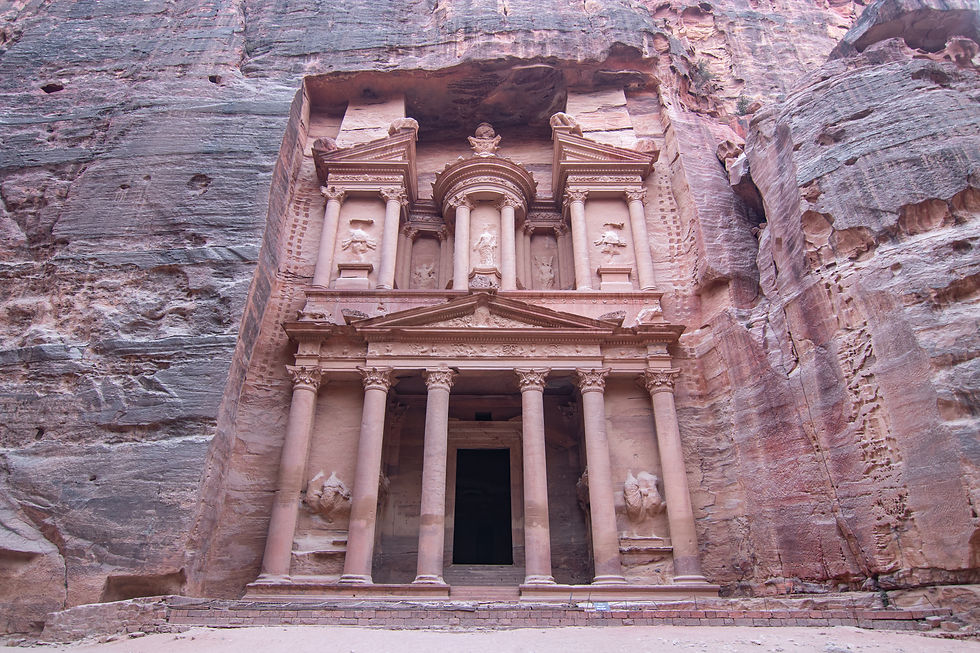
Petra is a UNESCO World Heritage Site and was conferred the status of New ‘Seven Wonders of the World' in 1985. This architectural marvel has distilled the skills and traditions of the Edomites, Arab Nabateans, and Romans creating the legacy that stands today. Established as early as the 3rd century BC, this site remained unknown till the 18th century when it was discovered by a disguised Swiss traveller.
I hope you get all your answers by the end of this blog and are ready to fly to Petra. Along the way, there are a few fun facts from Jordan and Hollywood.
History
The city of Petra or Arabic Batra was built over sandstone terraces overlooking the Wadi Musa in southwest Jordan. The Edomites were known to occupy Petra around 1200 BC. Despite ruling for large periods, Petra didn't gain prominence during this era. Subsequent centuries were highlighted by the rule of Arab Nabateans and Petra prospered in the spice trade. The civilization expanded and the population exploded. Petra enjoyed prosperity until the Nabateans were defeated by the Romans in 106 BC and Petra became part of Roman Arabia. The Islamic crusade occurred in the 7th century and the city remained largely unknown until its discovery by a Swiss traveller Johan Ludwig Burckhardt in 1812. Petra has seen its share of civilizations which have left an indelible mark on its history. Having briefed you on the history, let us dig into the stuff that you need to know before heading to Petra.
How to reach
Wadi Musa or the ‘Valley of Moses’ is the gateway to the ancient Nabatean city of Petra located in the Jordanian desert. It is believed that Moses and his followers once walked through the valley. Legend also has it that Moses had struck a rock on God’s command and the water that gushed out was named Ain Musa or 'Spring of Moses'.
Jordan Express Tourist Transport Co Ltd or JETT is the state road transport company for tourists within Jordan. They have well-connected roadways and offer simple as well as luxurious options. There is one JETT bus daily morning from Amman to Wadi Musa (approximately 240 km). It departs from the south bus station (only when it is full) and the journey takes around 4-5 hours. You can also hire a private taxi but that would set you back by around 100 JD. If you are a group of friends or family, a rental car seems the most logical way to travel. It gives you freedom, is economical and faster than other modes of transport. You can reach Petra in 3 hours by a private taxi or self-drive rental car.
On the other hand, if you’re travelling from Aqaba (approximately 130km), you have multiple JETT buses plying the route. Aqaba is much closer, so the journey time is less than from Amman. You can also get a private taxi for anywhere around 70 JD.
Where to stay
Jordan has amazing hostels which are a comfortable yet affordable way of staying. If you are on a budget, I would highly recommend staying in hostels. You can check hostelworld.com for great hostel options. There are also several mid-range and luxury options to choose from at booking.com and hotels.com.
Best time to visit
Petra is open all year long. Petra sees a huge influx of tourists during spring and fall as the temperatures aren’t in the extremes. The rest of the season has pretty high daytime temperatures.
Where to start
You can either walk or take a shuttle/ taxi to reach the visitors' centre from your place of stay. The entrance fee for Petra is included in the Jordan Pass. The site is open from 6 am to 4 pm or 6 pm (depending on winter/ summer). Petra can be explored independently while sticking to trail routes or via guided tours. The main trails that I would recommend are-
Main Trail
The most utilised trail starts from the visitors' centre of Petra through the Siq to the Treasury and then continues through the Colonnaded street to end at Qasr Al-Bint. This easy trail is mostly flat with no changes in elevation.
Al-Khubtha Trail
This trail meanders from the visitors' centre through the Siq and the Treasury to the Street of Facades. It then takes you through the royal tombs to end at the Al-Khubtha High Place. This trail rewards you with an amazing aerial view of the Treasury.
Besides these two trails, a number of other trails can be explored depending on the availability of time. To learn more about them, you can visit international.visitjordan.com.
What to see
The top sites that you would come across while covering the trails include:
The Siq
Wadi Al-Siq is the narrow winding passage bordered by two tall meandering sandstone walls approaching the Treasury from the east. It usually takes half an hour to reach the Treasury from the visitors' centre. Along the way enjoy the ever-changing shades of the sandstone walls and admire the ingenuity of the Nabatean rock-carved water harvesting system.


The Treasury
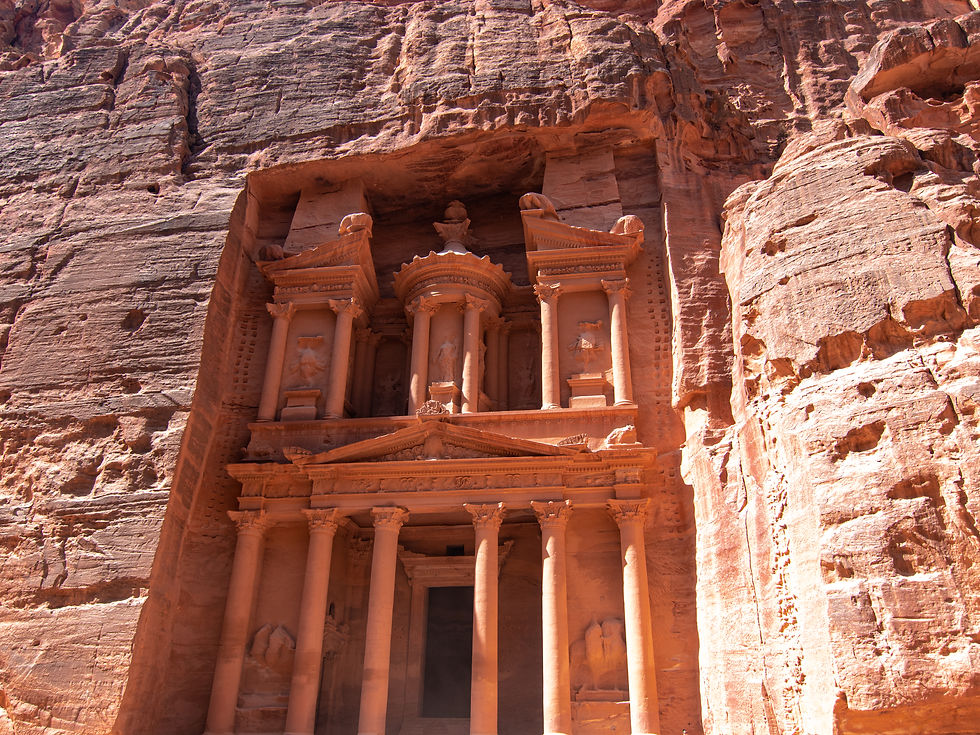
Al-Khaznah is the most famous ruin of Petra. To all the Indiana Jones fans, this was famously pictured at the climax of Indiana Jones and The Last Crusade. It gives you a sense of fulfilment on having finally laid your eyes upon something that you’ve been dreaming to see for so long. Take time to soak in history and relish the moment.
If you are early in the morning, you might be able to witness the sunlight creeping on the walls of the Treasury.
Amphitheatre
Located just around the Street of Facades with a capacity of almost 8500, this theatre was carved out of the mountainside. And is just as impressive as the one in the capital city of Amman.

Street of Facades and Colonnaded Street
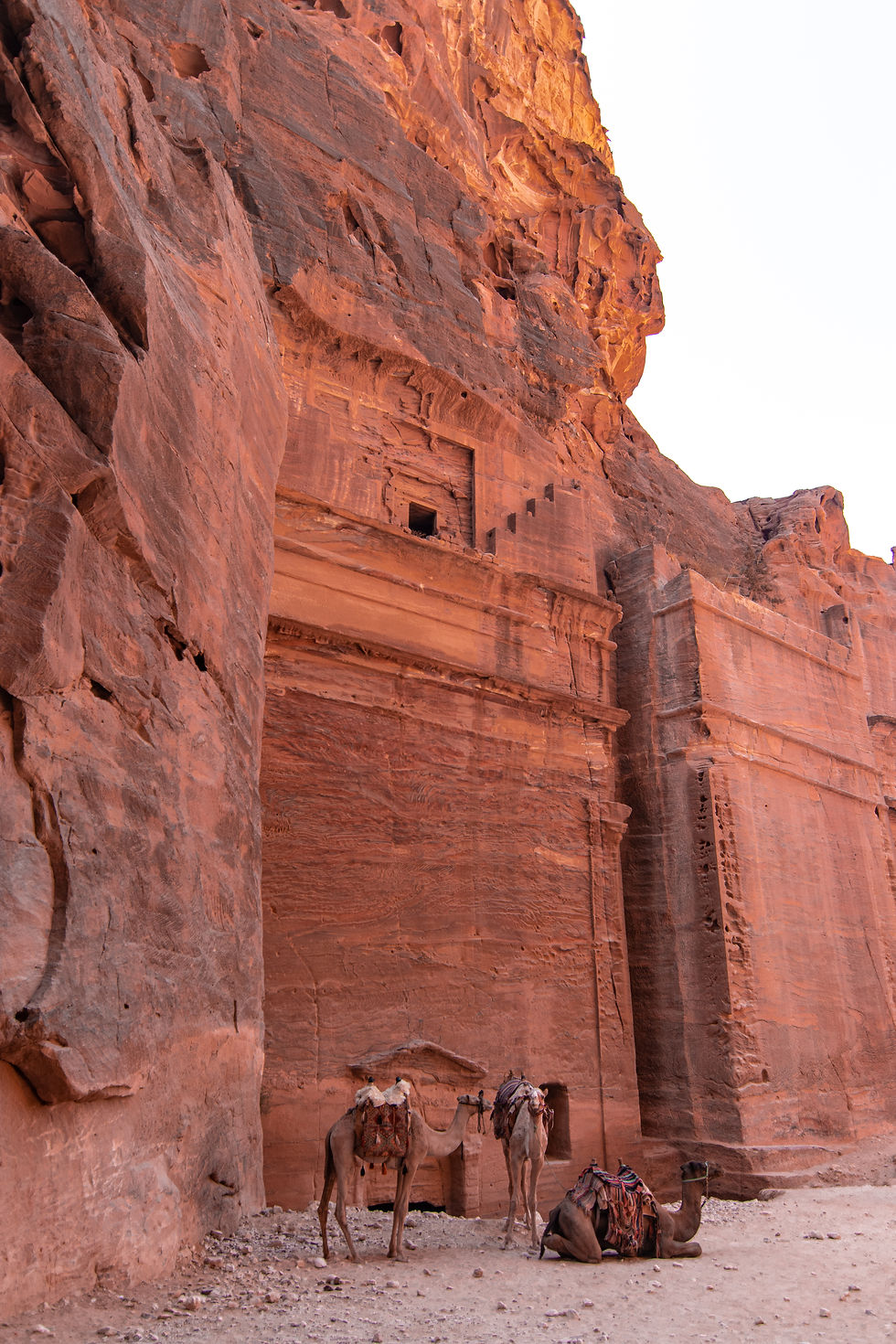
You would come across the amphitheatre, the long columns, the marketplace, shops and the great temple while also getting a view of the royal tombs.
Royal Tombs
The Urn tomb, the Silk tomb, the Corinthian tomb and the Palace tomb lie in succession and are part of the Al-Khubtha trail.

Monastery
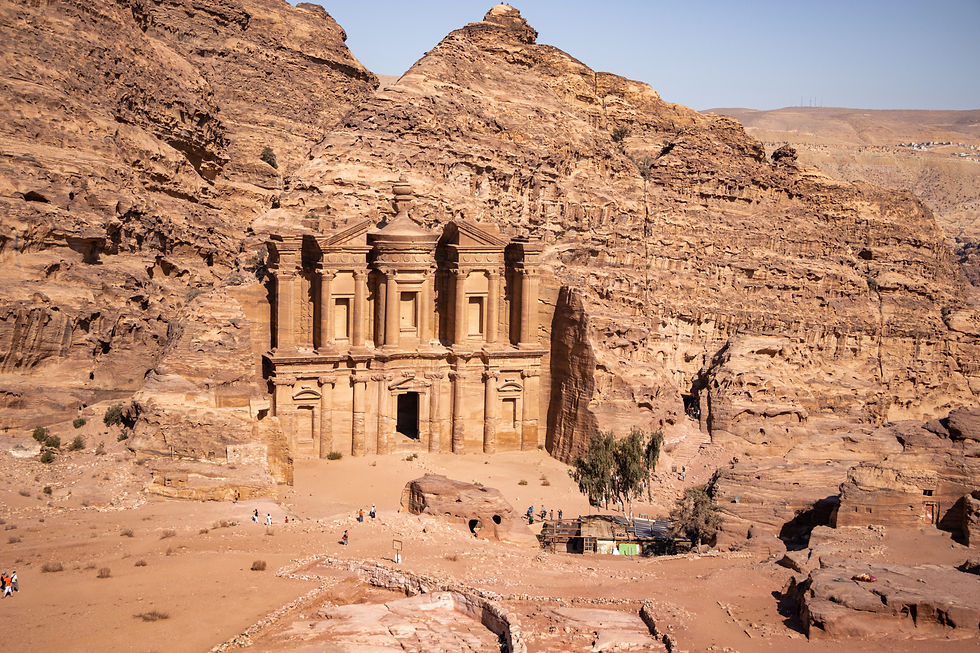
Al Dayr is much larger than Al Khazneh but less elaborate. It lies on the opposite end of the Treasury and requires an uphill climb of 800 stairs to reach the destination. But it’s all worth it. I am a huge fan of the initial instalments of the Transformers series. The Monastery was in fact the Tomb of the Primes in the Transformers: Revenge of the Fallen movie. This scene made me fall in love with Petra and I relived that moment when I saw the Monastery for the first time.
If you plan on visiting the Monastery, keep an entire day at hand to explore.


What else should I know when visiting Petra?
Important sites within Petra can be covered in one day, but it will end up being a bit rushed. To have a wholesome experience, enjoy Petra over at least 2 days despite all the extra walking you would have to do. Because the price is just 5 JD higher than the single-day ticket and the experience would be significantly better. We had chosen the Jordan Pass with a two-day Petra entry.
Single-day ticket - 50 JD
Two-day ticket - 55 JD
Three-day ticket - 60 JD
Jordan Pass with
Single-day Petra entry - 70 JD
Two-day Petra entry - 75 JD
Three-day Petra entry - 80 JD
If you want to experience the Treasury in solitude, start early at 6 am. The later you start, the more likely you are to come across a lot of crowds. You would not want to miss the first rays of the sun reflecting off the Treasury.
Pre-book your Petra by night tour before you arrive at Petra, if possible. The seats are limited and the tour is available only on Monday, Wednesday and Thursday. The tour starts at 8.30 pm and ends around 10.00 pm.
Petra by night price - 17 JD
There is a short hike to a viewpoint opposite the Monastery, which gives you amazing aerial views of the Monastery and the neighbouring valley (like the Al Khubtha trail does for the Treasury).
Horseback-ride (from the visitors' centre to the Treasury) is included in the ticket if you want to utilise it.
Wear a comfortable dress and shoes as you would be walking almost the entire day. Carry lots of water as it can be dehydrating to walk an entire day under the sun. Also, carry shades and hats/ caps to shield yourself from the sun.
There are numerous Bedouin tea stalls and small kiosks for refreshments and souvenir shopping along the way. The Basin is a full restaurant located near the museum. You can enjoy a delicious buffet at lunchtime. But be prepared for some waiting time as it is usually crowded.
Petra is decently equipped with toilets. You should be able to manage nature’s calls without much fuss.
Petra museum located on the main tourist street will give you a glimpse into the Nabatean civilization.
For those interested in cooking, there are cooking classes featuring Nabatean dishes in which you can partake.
To top it all, witness the myriad of colours reflecting off the sandstone walls.
Despite spending two days in Petra, I wished to explore the ruins and witness the never seen before parts of Petra. There is a magnetic attraction to Petra that will never wear off and I hope that catches you too!!
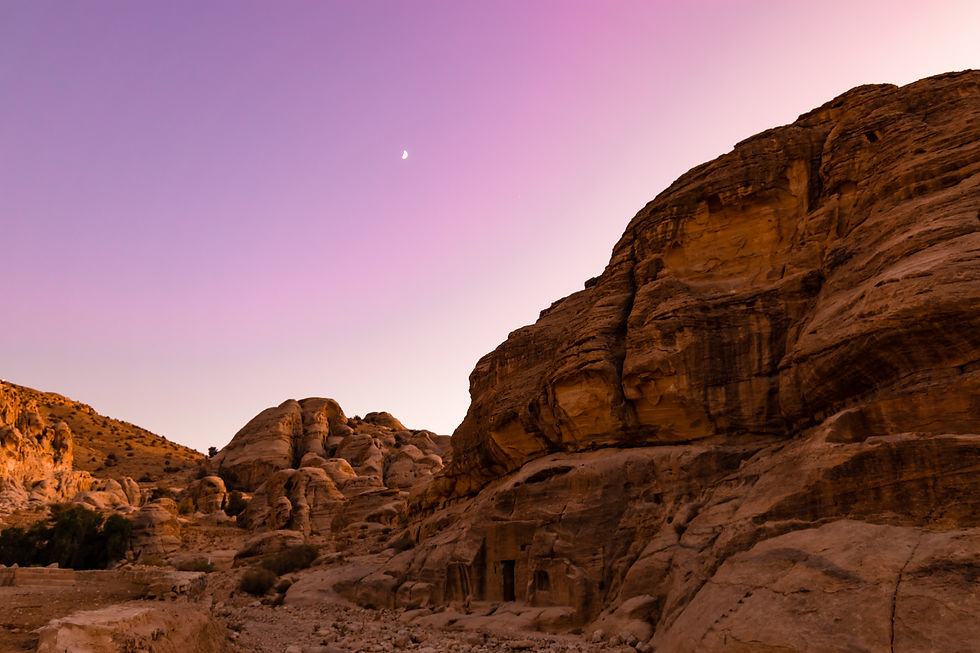
Sun rise over the Treasury
Comments