
A Complete Guide to Hampi: India's Lost Kingdom

Updated: Nov 10, 2022
Hampi, located in the southern state of Karnataka, India, has been rightly bestowed
with the prestigious status of a UNESCO World Heritage Site. It feels surreal when
visiting this vast landscape, strewn with boulders, azure skies, verdant fields, royal
pavilions, and bastions, almost as if you were entering another universe.
How to reach
Hampi is well connected with India's major cities and towns via a strong network of trains, buses, and flights. The nearest railway station is Hospet, 15 km away, and the closest airport is Vidyanagar, around 40 km away, with connecting flights from Bangalore and Hyderabad. There are also a dozen trains which haul between Bangalore and Hospete, the nearest rail station with an average travel time of 9-10 hours. You can take buses from Pondicherry or Chennai which regularly ply on this route and directly hop off at Bangalore city.
Best time to visit
The best time to visit would be November through to January: the days are not too hot, the nights are pleasant, and the town comes to life for the Hampi Utsav or Vijaya Utsav, a three-day extravaganza with cultural shows, fireworks, and exhibitions celebrating its rich history and grandeur.
Where to stay
You can stay at Hospete albeit staying away from the hippie energy of Hampi or stay at Hampi with multitude of options ranging from hotels, guesthouses, and homestays. You can book your stay at booking.com or airbnb.co.in.
History
Hampi was known as Kiskinda Kshetra. The folklore is that Vanara Kingdom of Kiskinda in Ramayana resided here. Also, Anjaneya Hills within Hampi was the birthplace of Hanuman, the faithful devotee of Lord Rama. Despite the reigns of multiple dynasty in Hampi, it attained its zenith during the reign of Krishnadeva Raya.
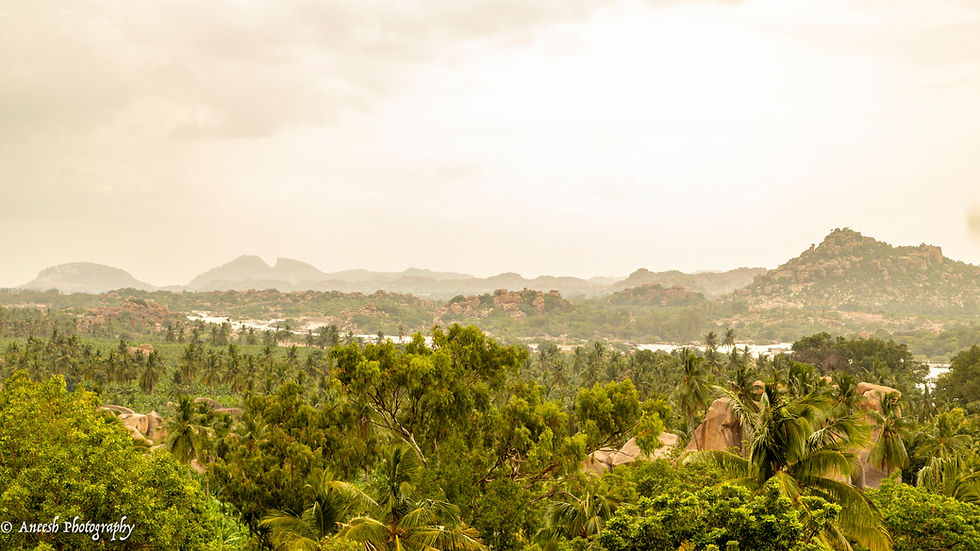
Hampi was the capital of the once-powerful Vijayanagara empire in the 14–17th centuries. Owing to its immense prosperity, the kingdom was plundered by the rival armies of the Deccan Sultanate, turning it into rubble and ruins. Notwithstanding this, the rich history emanates through the remains of the austere Indo-Persian architecture, transporting you to the erstwhile bustling Vijayanagar empire. The first glimpse of the boulder strewn terrain left me amazed as to how could this martian landscape exist on earth. The terrain appeared chaotic yet conveyed a sense of serenity. It transported me to the old Vijayanagara empire through the maze of my imaginations.
The beginning
The first thing we did when we reached Hampi bazaar was to rent a 2-wheeler and get a map of the Hampi ruins. We wanted absolute freedom of movement with the luxury of our own time. Though Hampi has seen a steady rise in tourist population yet it was surprising to see limited rental options for bicycles/ 2-wheelers and that too the fabled, vintage and omnipresent TVS Heavy Duty. The rental shops are towards the river bank of Virupaksha temple. Having your own/ rental car does give you the same freedom but you may not find parking spaces around all sites. The joy of riding a TVS Heavy duty is singular akin a super-bike ride (Just kidding!!)
The Tungabhadra River meanders through the town of Hampi, creating an oasis amid this vast craggy landscape.
Sites to visit
Virupaksha Temple
Located on the southern banks of Tungabhadra river, Virupaksha temple still remains an important place for worshipers of Lord Shiva. The golden 'Gopuram' is hard to miss once you reach the market place. The temple is open for worship till 6 pm. Make sure to witness the offerings within the main sanctum.

Vittala Temple
The fantastical temples and monuments cling to Hampi’s folklore. The highlight amongst them is the magnificent Vittala temple with its 56-musical pillars in the main hall and the giant stone chariot, rewarded with its own motif on the new Indian 50-rupee currency notes. Vittala temple is an important place of worship dedicated to Lord Vishnu.


Hazara Rama Temple
This temple is a temple with the royal centre of Hampi. The literal meaning " A thousand Lord Ram" signifies the stories of Ramayana carved on the wall as relief in an elaborate yet ornate way.
Monolith of Lord Ganesha
A giant statue of Lord Ganesha carved out of a single stone
Lakshmi Narasimha Temple
The largest statue in Hampi. This temple is dedicated one of the incarnations of Lord Vishnu. A part of the statue was damaged during the plundering by the Mughals.
Matanga Hill and Hemakuta Hill
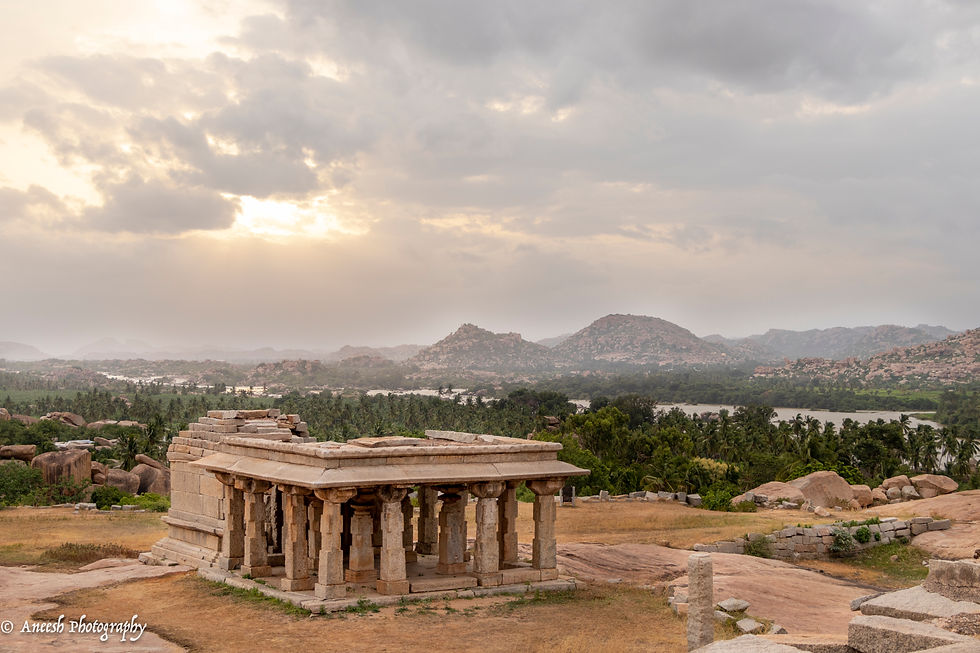
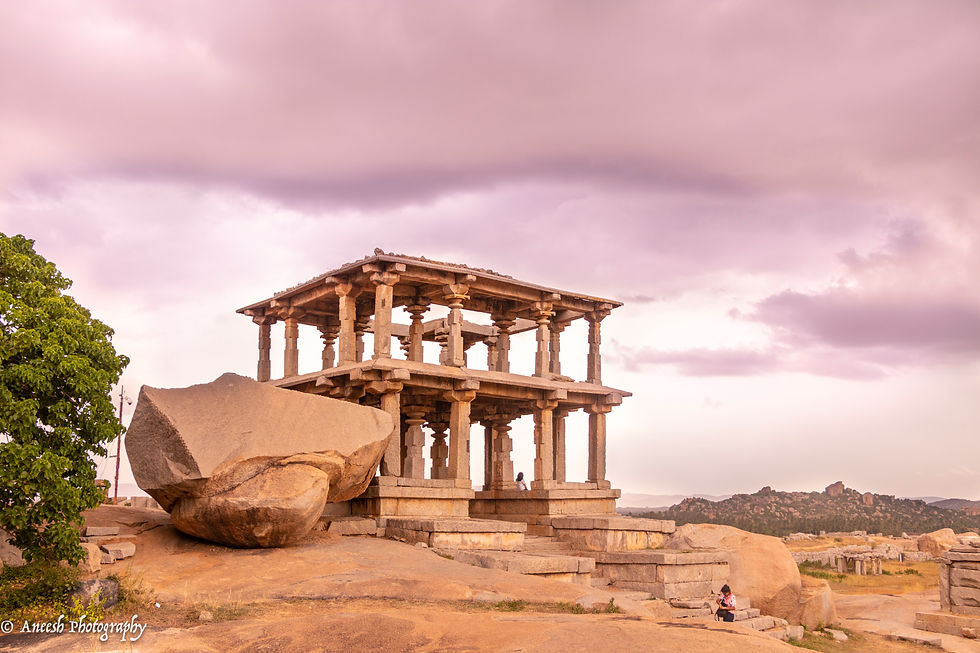
The two hills are located on the southern bank and face each other. Both the hills provide an amazing vantage point to witness the temples, the ruins, the craggy landscape and above all the sun setting over Hampi. We decided on covering as many sites as possible and reach Hemakuta Hill to witness the splendour of sunset.
After your eyes have devoured the beauty of the landscape, do not miss the chance to witness the ever-changing colors of the sky during sunset. The view from the top of Hemakuta hill is breathtaking and a popular spot for photographers who want to witness the sunset over Tungabhadra river. The conditions may be windy occasionally. I would recommend to carry a tripod if you desire to shoot a time-lapse.Across the Tungabhadra river you can see the northern bank with Anegondi hill.

Zenana Enclosure
It is important to highlight this site as Zenana enclosure was built on an Indo-Islamic inspiration contrary to the Dravidian architecture that you come across rest of Hampi. It was a fortified place with watch towers for the royal ladies of the Vijayanagara empire. The Mughal influence on Hampi is characterised in no better way than the Lotus Palace located within Zenana enclosure. The Lotus Palace is characterised by its beautiful domes shaped in the form of half open lotus bud. Despite the destruction of many structures around, this palace has managed to retained its structural integrity.

Besides these main sites, there are stepwells, pavilions, mandapams, temples, and ruins scattered across Hampi. You can wander through the rugged terrain and be immersed in the architectural marvel of the monuments, ride a coracle across the river, or treat yourself to a bird's-eye view with a short hike to the nearby hilltops– this place has something for everyone. You can complete the sojourn by splitting your schedule across two days. Its too overwhelming to visit all the sites in one day and imbibe the knowledge.
As the light fades and the monument complex closes its doors, the Hampi bazaar springs to life. Enjoy a stroll along the banks under the waning twilight, indulge yourself in the local street food, or strike a conversation with the local artisans. Before you call it a day and seek the comfort of your cozy bed, spend some time stargazing. Away from the ever-growing city light pollution, Hampi is one of the best spots in the country for astrophotography.

Hampi displays a potpourri of cultures and traditions, with innumerable temples and mosques standing together in perfect harmony. When visiting India, do travel to Hampi and experience the magical feeling.
Tips for Travel:
You can cover most of the sites of Hampi in 2 days. But, if you want to visit the Anegondi Hills, keep an extra reserve day.
Most of the places are open from sunrise till sunset. So you get ample time to cover the important sites.
While in Hampi, do not miss the coracle ride. But, there may be cancellation of coracle rides if the climate is not good or if it is rainy season.
Carry sunscreens and wear light clothes if you are travelling during summer as the sun may be bearing down hard. Don't forget comfortable shoes for your feet.
Tripods are not allowed inside the premises of the main temple complex like Vittala temple. You need to seek prior permission from the Archaeological Society of India (ASI) for its use.
If you are keen on astrophotography, preferably stay at Hampi rather than at Hospete. Otherwise you will end up losing time to travel to and fro from Hospete.

Comments