
North Cambodia Travel Guide: Siem Reap, Battambang and Tonle Sap

There is a part of Cambodia that draws people from across the world, not for its beaches or its nightlife, but for something that has been standing long before tourism existed.
North Cambodia holds not just this country's, but one of the most extraordinary architectural marvels of our world. It embodies landscapes that shift from temple corridors to river towns to a lake that changes size with the seasons.
Siem Reap is where most itineraries begin. But the region holds more than its most famous address: a colonial town to the west that most travellers skip, and a freshwater lake to the south that operates on entirely its own logic. Stay long enough in north Cambodia, and it reveals itself in layers.
Siem Reap, Cambodia: More Than Just a Gateway
Most people arrive in Siem Reap with Angkor Wat as the only item on their list. That is understandable. But Siem Reap is a city that rewards those who travel beyond the temples, who wander its French quarter streets in the evening, eat at its night markets, and let themselves be surprised by what exists outside the temple complex.
The city itself is compact and manageable. Tuk-tuks navigate the streets with cheerful persistence. The old market area pulses with colour and movement. The riverside, calm by day, comes alive as the sun drops.

Siem Reap Weather: When to Go and What to Expect
Understanding Siem Reap weather shapes how you experience everything else. The region has two distinct seasons, and each offers a different version of the place.
The dry season, November through April, is when Siem Reap is most visited and comfortable. Temperatures sit between 25°C and 35°C, skies stay largely clear, and the temple paths are dry and walkable. December through February is the most pleasant window within that period, ideal for long mornings at Angkor before the heat of the day builds.
The wet season, May through October, brings heavy afternoon downpours, a brilliantly green countryside, and significantly smaller crowds. Tonle Sap Lake expands dramatically during these months, something worth seeing in its own right. For those who prefer a less crowded experience and don't mind working around the rain, this season has a particular character that the dry months cannot replicate.
For most travellers, November through February is the most reliable window for Siem Reap: comfortable, manageable, and well-suited to temple explorations.
Things to Do in Siem Reap
There is no shortage of things to do in Siem Reap, although the temples are where everything begins.
Angkor Temple Complex
Nothing quite prepares you for the Angkor Wat temple. Not the photographs, not the descriptions, not even the accounts of those who have been before you. The moment the causeway comes into view, reflected in the moat at first light, something shifts. It is one of those rare places that earns every superlative and then exceeds them.
Built in the 12th century under King Suryavarman II, Angkor Wat is the largest religious monument on earth. Its five towers rise in a lotus formation, its bas-reliefs stretch for hundreds of metres depicting Hindu epics with extraordinary detail, and its scale registers in the body before the mind has processed it.

Sunrise at Angkor is a ritual worth the early alarm. Arrive before 5:30 AM, find your position by the reflecting pool, and watch the sky change behind the towers. It is, without an overstatement, one of the finest travel experiences Asia offers.
Angkor Wat is only the beginning. The Angkor Archaeological Park holds over a thousand temples, and two others are essential.

Angkor Thom, the ancient walled city within the park, centres on the Bayon temple, where 216 carved stone faces gaze outward in every direction. Walking among them and turning a corner to find another face looking back at you is genuinely disorienting, in the best possible way.

Ta Prohm is where the jungle has been allowed to work its way back through the stonework. Enormous tree roots wrap around walls, towers tilt at angles nature has chosen, and the complex feels caught between two forces. It is surreal in a way that photographs only partially capture.
Spend at least two or three full days at Angkor. One is surely not enough.

The Old Market and Pub Street Area
Back in town, the Psah Chas or Old Market area is where Siem Reap energises. The covered market carries silks, carvings, spices, and jewellery in cheerful, organised chaos. Nearby, Pub Street draws an evening crowd: restaurants, bars, street food stalls, and the general energy of a town that has learned to host the world without losing itself entirely.
Artisans Angkor
One of the most worthwhile things to do in Siem Reap is a visit to Artisans Angkor, a social enterprise training young Cambodians in traditional Khmer crafts. Silk weaving, lacquerwork, stone and wood carving: you watch skilled artisans at work, gain context for what you have been seeing in the temples, and if you choose to buy, your money goes directly to the people who made it.
The Siem Reap Night Market
The Night Market near the river is where the city gathers in the evenings. Lanterns overhead, stalls selling handmade goods, food vendors offering Khmer noodle soups, grilled meats, and tropical fruits. It is easy and warm, the kind of evening that makes a destination feel like a place rather than a stop on a list.


Battambang: A River Town Worth the Detour
Battambang is a quiet riverside town in Cambodia known for its relaxed pace, colonial architecture, and local charm. Unlike more tourist-heavy destinations, it offers a more authentic experience with art galleries, countryside views, and simple day-to-day life. You won’t find flashy attractions here, but that’s exactly the appeal—it’s a place to slow down, explore at your own pace, and see a different, more laid-back side of Cambodia.

French colonial shophouses line wide streets. A bamboo train rattles through the countryside. An arts scene has grown here with remarkable resilience in the decades following the Khmer Rouge.
The Bamboo Train, locally called the Norry, is a flat bamboo platform on wheels, powered by a small motor, running along an old railway track through the fields. It is not fast. It is not refined. It is completely joyful, and most travellers count it as one of the better hours they spent in Cambodia.

The Phare Ponleu Selpak Circus is a social arts organisation that trains young people from difficult backgrounds in circus performance. The shows combine acrobatics, theatre, and storytelling, and they land with more emotional weight than you expect walking in.
Battambang also sits in Cambodia's most fertile agricultural region. Rice paddies, orange groves, and fishing villages define the surrounding countryside. A half-day tuk-tuk tour through the villages shows you a version of Cambodian daily life that the temple circuit does not.
Tonle Sap Lake: A Lake on Its Own Terms
South of Siem Reap lies Tonle Sap, Southeast Asia's largest freshwater lake and one of the more ecologically unusual bodies of water on the planet.
During the wet season, the Mekong River reverses the flow of the Tonle Sap Lake, pushing water back into the lake and expanding it from roughly 2,500 square kilometres to nearly 16,000. When the dry season arrives, the process reverses and the lake contracts. Entire communities of people have built their lives around this cycle, and it shows in everything from the architecture to the fishing patterns to the way villages are positioned relative to the waterline.

The floating villages are among the more striking things you will encounter in Cambodia. Homes, schools, temples, and markets, all on water. Chong Kneas and Kampong Phluk are the most visited, each offering a different sense of what this kind of life actually looks like on an ordinary day.
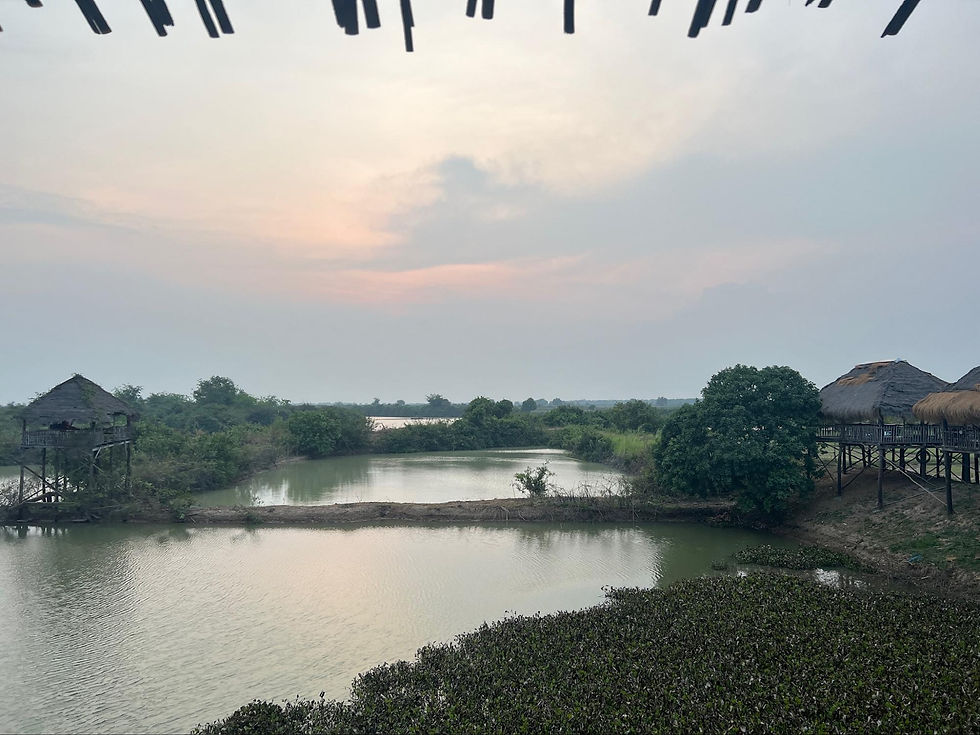
A boat through Kampong Phluk in the early morning, moving through flooded forest with the light coming in low, is the kind of moment that quietly lingers in your memory long after the trip fades and the practical details blur.

Putting North Cambodia Together
Siem Reap is the natural anchor for any north Cambodia itinerary. The temples alone justify the journey and can hold you for several days if you let them. But the region is richer when you move beyond the archaeological park.
Give Battambang a day and a half at minimum. Give Tonle Sap a morning. Take the slow boat between Siem Reap and Battambang rather than the road if time allows. The journey through the flooded plains and river channels is as much a part of north Cambodia as anything you will find at the destination.
North Cambodia is not a stopover. It is, in every sense, the trip itself.


Comments