
West Cambodia: Sihanoukville and Kampot

There is a part of Cambodia that most people fly over on their way to Angkor Wat. It sits at the southwestern edge of the country, where the land meets the Gulf of Thailand and the towns along the river carry the faded grace of another era.
West Cambodia works differently on you. The coast at Sihanoukville, the pepper farms and colonial streets of Kampot, and the river that runs through both of them in its own way. They are simply a reward for those who show up without a fixed agenda.
Sihanoukville, Cambodia: The Coast at Its Most Honest
Sihanoukville sits on Cambodia's southwestern coast, the country's only major port city. For a long time it was the kind of beach town that backpackers passed between themselves like a secret. The city has changed considerably since then. Rapid development has reshaped its skyline, its streets, and its character over the past decade. What exists now is less raw and more polished. And yet the coast is still there. The water is still warm, lined by powdery sand. And if you know which direction to walk, Sihanoukville still delivers something genuine.

The Beaches
Otres Beach is where you want to be. Further from the main stretch of the city, lined with coconut palms and guesthouses that have kept their character, it offers the kind of morning where you wander and lose track of the hour entirely. The sand is soft, the sea warm, and the atmosphere serene.
Serendipity Beach has more energy: hawkers, music in the distance, a social crowd that wants their beach days animated. It suits younger travellers or those who want company built into the experience.
Sokha Beach is another option, calm, long and well-maintained, where families wade in and out and afternoons stretch without demand.
The Islands Around Sihanoukville
Just off the coast, Koh Rong and Koh Rong Sanloem are where Sihanoukville makes its strongest case. The reef is vibrant, the nights are starlit in the way cities never are, and the bioluminescent plankton that lights up the coast after dark is the kind of thing you boast to people back home and watch their expressions change.
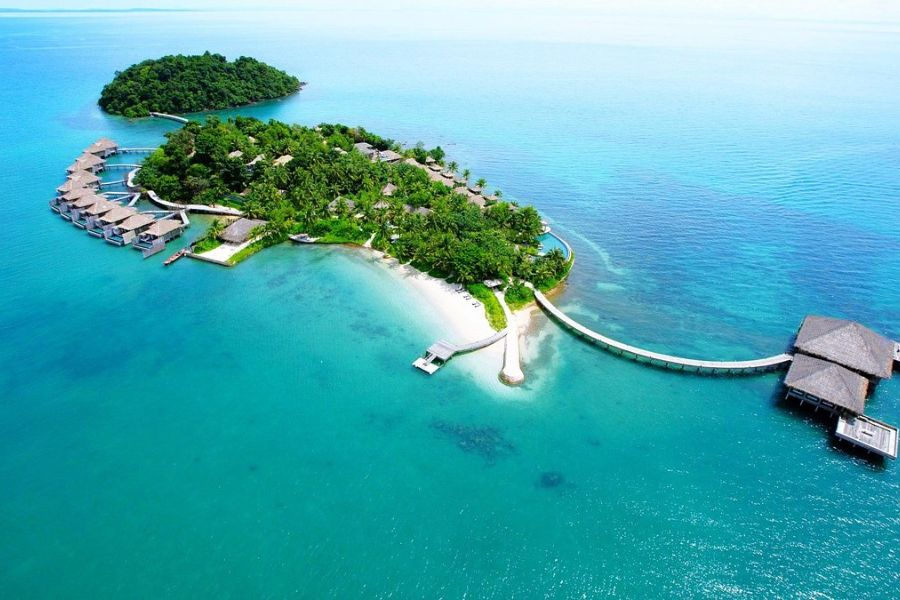

Day trips run regularly from the port. Those who stay a few nights on the island, however, come back having experienced something altogether different from what the mainland offers.
What Sihanoukville Feels Like Now
The city carries the marks of rapid change. There are still rustic edges and untouched corners left. But seafood is still being grilled over coals at dusk, conversations still spill out of open-air bars, and the waterfront still turns golden at the end of the day. Sihanoukville is a city mid-chapter, and there is something interesting about watching a place in that state.
Kampot, Cambodia: Quiet, Unhurried, Unforgettable
Two hours northeast of Sihanoukville, the landscape shifts completely. The coast gives way to rice paddies and rolling countryside, and then a small colonial town appears on the edge of the Praek Tuek Chhu River. Kampot is one of those places where the past has not been demolished or aggressively restored. Wide-shuttered French buildings line tree-shaded streets. Old facades wear their age with a certain dignity.

Kampot Weather: What to Expect Before You Go
Kampot weather follows two clear seasons, and knowing which one you are arriving in shapes everything.
The dry season, from November through April, is the most comfortable window. Temperatures sit between 25°C and 33°C, skies stay largely clear, and the Bokor Mountain road above town remains open and accessible. December through February is the sweet spot within the season: warm days, cool evenings, and the surrounding countryside at its most golden.
The wet season, May through October, brings heavy rain that typically arrives in the afternoon and carries through the night. The hills turn a vivid green, the river rises, and the town becomes notably quieter. For those who want Kampot without the peak-season crowds and don't mind working around the rain, these months have their own appeal.
November through February is the most reliable window for first-time visitors planning around Kampot weather.
The Kampot Pepper Farms
Kampot pepper holds a geographical indication status, one of the few spices in Southeast Asia to have earned it, and a visit to one of the farms in the surrounding countryside tells you exactly why it carries that distinction.
The vines grow tall along wooden poles. The pepper comes in black, white, red, and green, each variety distinct in heat and character. The farmers walk you through the process and their knowledge with a passion that shows why these families have cultivated Kampot peppers for generations.
You will leave with more Kampot pepper than you planned to buy and that is not a complaint!

Bokor Mountain and the Ghost Town Above
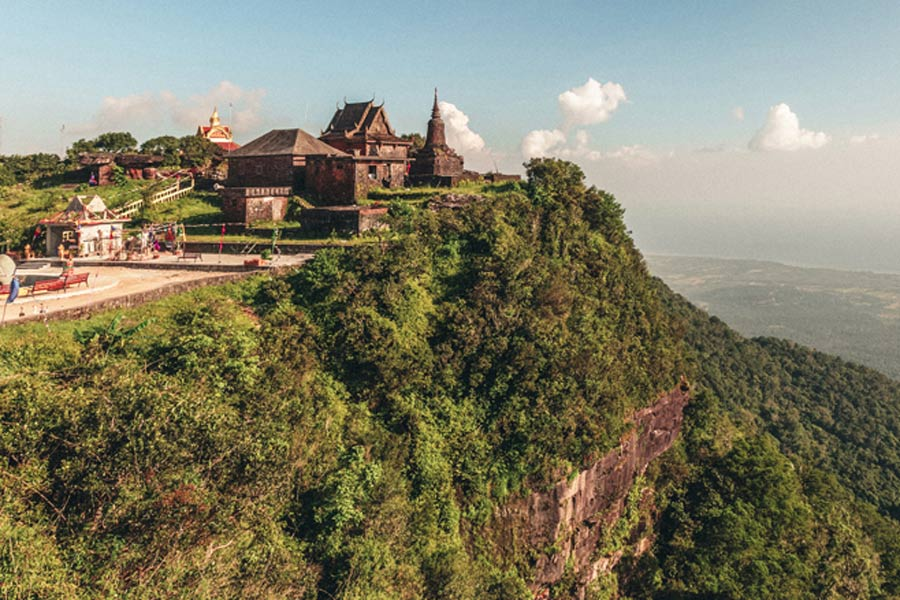
Rising sharply behind Kampot, Bokor Mountain holds an old French hill station at its summit that has been abandoned, partially reclaimed, and left to the elements more than once. The drive up passes through dense forest, and the views open gradually as you climb.
At the top, colonial buildings sit half-consumed by vegetation. A church still stands. The fog rolls in on certain days and changes the atmosphere of the place entirely. On clear days, you can see the coastline, the Gulf of Thailand, and the distant edges of Sihanoukville from up here.
Evenings on the Kampot River
Sunset cruises along the Praek Tuek Chhu move past mangroves and fishing villages as the sky turns amber. Back on the riverfront, small restaurants serve fresh fish prepared with Kampot pepper and music drifts from somewhere nearby.
How Sihanoukville and Kampot Sit Together
Taken together, these two places offer a version of Cambodia that most itineraries miss. Sihanoukville gives you the sea, the islands, and a coast that is still pristine. Kampot gives you the river, the hills, the pepper, and the quiet grace of a town that has never felt the need to compete with anywhere else. They are only a couple of hours apart by road. The contrast between them is far greater than the distance suggests, and that contrast is exactly what makes travelling between them worthwhile.
West Cambodia leaves you with the memory of how a place felt: salt in the air, the sound of the river at dusk, the weight of good pepper in your palm.
Frequently Asked Questions About Sihanoukville for Indians
How to Get to Sihanoukville
Indian travellers most commonly reach Sihanoukville as part of a broader Cambodia itinerary. No direct flights operate from Indian cities, so a connection through Phnom Penh is standard.
The most practical land route goes through Phnom Penh. Reliable operators like Giant Ibis and Mekong Express run daily air-conditioned coaches on this corridor, all bookable online. Private taxis and minivans are popular among Indian family groups or those travelling together, offering flexibility on stops and timing. For those on a tighter schedule, flying into Sihanoukville International Airport via Phnom Penh or Siem Reap recovers most of a travel day.
Travellers combining Thailand and Cambodia sometimes enter via the Koh Kong land border before heading south, a longer route but a scenic one.
How Far Is Sihanoukville from Phnom Penh
Approximately 220 to 230 kilometres by road, roughly the same as Mumbai to Pune. By bus the journey takes 4 to 5 hours; by private taxi around 3.5 to 4 hours. This is one of the most well-serviced routes in Cambodia, with multiple daily departures.
How Far Is Sihanoukville from Angkor Wat
Angkor Wat sits near Siem Reap in northern Cambodia, roughly 550 to 600 kilometres away. The journey routes through Phnom Penh and takes the better part of a full travel day across two legs. Think of it as roughly the distance between Delhi and Jaipur, with a mandatory stop in the middle.
Most Indian itineraries combine both. Flying at least one segment is advisable for anyone on a 7 to 10 day holiday, as attempting both legs overland leaves very little energy for actually experiencing either place.
How to Get from Siem Reap to Sihanoukville
Buses from Siem Reap to Phnom Penh take roughly 6 hours, and from there another 4 to 5 hours to Sihanoukville. For those short on time, flying Siem Reap to Phnom Penh takes under an hour, with onward connections available.
Is Sihanoukville Safe
Most travellers, including Indians, move through without incident with reasonable awareness. The beach areas, particularly Otres Beach, are calm and well-suited to families.
After dark, solo Indian women should exercise more caution: stick to well-lit areas, travel with others where possible, use trusted apps like PassApp rather than flagging unknown vehicles, and avoid isolated stretches of beach at night. Sihanoukville asks for more alertness than Kampot or Siem Reap, but it is manageable with the right preparation.
What to Do in Sihanoukville
Sihanoukville offers beach time, island trips, and fresh seafood at prices that compare very favourably to Goa or the Andamans.
Otres Beach suits families and anyone wanting a relaxed few days by the sea. Serendipity Beach suits younger travellers looking for a livelier scene. The standout experience, though, is the islands. Day trips to Koh Rong and Koh Rong Sanloem offer water clarity and coral reef snorkelling that genuinely rivals the Andamans at a fraction of the cost. Those who stay a few nights come back having experienced something altogether different from the mainland. The bioluminescent plankton after dark is the kind of thing you end up telling everyone about.
Fresh seafood including grilled prawns, crab, and fish is abundant and affordable. Vegetarian options exist but are more limited, so it helps to ask ahead at restaurants.
At Night: The Otres Beach strip is the most comfortable option for most Indian travellers: small restaurants, grilled seafood, cold drinks, and the sound of the sea. The bar areas near Serendipity Beach are more animated, with open-air seating and a mixed international crowd familiar to anyone who has spent evenings at Goa's beach shacks. Night markets, when running, offer street food and local snacks, with flavours that sit surprisingly close to home.
Is It Worth Visiting Sihanoukville
For Indian travellers, yes, provided expectations are set correctly.
Sihanoukville is not Phuket or Bali. It does not have their infrastructure or finish. What it does have is affordability, a raw coastal experience, and island access that rivals destinations costing significantly more. For anyone who finds the Andamans overcrowded or the Maldives out of budget, Koh Rong makes a compelling case on its own.
For anyone building a 10 to 14 day Cambodia itinerary taking in Siem Reap and Phnom Penh, Sihanoukville gives that journey a natural and rewarding final chapter.


Comments