
Top 12 Things to Do in Phnom Penh

Phnom Penh, the largest city and capital of the Kingdom of Cambodia is located at the confluence of Mekong, Tonle Sap and Bassac Rivers. As with all civilizations, being located at the confluence of three rivers meant that Phnom Penh grew rapidly and eventually replaced Angkor as the new capital in the 15th century. And recently, since being liberated from the Khmer Rouge, the “ Paris of the East” is fast becoming the next big destination in south-east Asia.
Phnom Penh is a layered city—where ancient Khmer architecture stands beside a past that is difficult to process, and a present that moves with undeniable energy. It doesn’t separate these parts for you. They exist together, shaping how the city feels from the moment you arrive.
Phnom Penh meets you fully—the rush of motorbikes, the quiet weight of its history, and the warmth of its people, all at once. It’s not a place you move through quickly or understand instantly.
You don’t explore Phnom Penh to check things off. You move through it slowly, letting each experience settle—until the city begins to make sense in its own time.
1. The Royal Palace & Silver Pagoda
In the middle of the city’s constant movement, the Royal Palace has stood tall as a symbol of traditional Khmer architecture. This is the official residence of the royal family with a remarkable similarity to the one in Bangkok. The gold glints in the sunlight, the architecture is strikingly detailed, and everything carries a quiet sense of order. To this day Khmer people visit to pay their respects at this place.
Within the Royal Palace walls, The Silver Pagoda or Wat Preah Keo, is a treasure to behold. You feel like a king or a queen walking on the floor that is lined with thousands of silver tiles, and surrounded by sacred Buddha statues glittering in stillness. Despite losing a significant amount of its precious contents during the Vietnamese invasion, Silver Pagoda is a true reflection of the richness and artisanship of the Khmer civilization.

2. Walk Through Tuol Sleng Genocide Museum (S21)
This is where Phnom Penh begins to move you from within. This is one of sites that takes you through the torture of the Khmer Rouge alongside Choeung Ek. Tuol Sleng was once a school that was converted into a prison and that familiarity makes it even harder to process what it became. Standing within a quiet and unassuming neighbourhood, S21 was where prisoners were brought to be detained and tortured. The rooms are stark, preserved, almost frozen in time. Photographs of victims stand there in a silent and eerie way—faces you can’t unsee.
3. Reflect at the Killing Fields of Choeung Ek
A short drive from the city takes you to the killing fields of Choeung Ek. There are trees, open space, a kind of calm—but it’s layered over something much deeper. Choeung Ek is where the detained prisoners were brought for execution. The memorial stupa, housed with remains, stands as a reminder of the sufferings under the Khmer Rouge. Choeung Ek holds a memorial ceremony every year on 20th May to honour those victims.

4. Walk Along the Riverside (Sisowath Quay)
Sisowath Quay is a lively riverside promenade located along the Tonle Sap and Mekong rivers. On one side are the Royal Palace and the National Museum whilst on the other side of the bank are the towering new modern buildings. The riverfront brings a different kind of energy. As the day fades, people gather—families, vendors, travellers, locals unwinding after work. Enjoy a relaxing walk along the quay and soak in all that Phnom offers you.
5. Explore Wat Phnom Temple
Set on a small hill, Wat Phnom is where the city’s story began. The capital has gotten its name from the hill where the temple stands. The climb is short, but the space feels hushed yet significant. Wat Phnom temple is adorned by a giant buddha statue surrounded by Lady Penh statues along with sculptures of King Ponhea Yat, the last Khmer king. Incense lingers in the air, prayers are whispered, and there’s a steady flow of people coming and going. It’s not grand in the way palaces are—but is rooted in treasures and history.

6. Discover the Central Market (Phsar Thmei)
The Central Market is bold, busy, and impossible to ignore. The art deco structure itself is striking, but it’s the inside that pulls you in—jewelry, antiques, clothes, food, voices, movement everywhere. It’s chaotic, yes, but also alive and authentic. I believe there is no better way to understand a culture or its people than a market place like this. Psar Thmei is a great place for spending time whilst even window shopping.
7. Visit the National Museum of Cambodia
If you want to understand what you’ve been seeing across the country, this is where it begins to make sense. The museum holds centuries of Khmer art and history, from intricate sculptures and terracottas to ancient relics. The courtyard garden is quiet, almost meditative, offering a pause between galleries.

8. Take a Sunset Cruise on the Mekong
As evening settles in, the sun sets and light softens. A boat ride on the Mekong offers a different perspective—watching Phnom Penh from a distance, the skyline reflecting on the water, the light turning everything gold. You can even experience the Mekong cruise at night as the towering skyscrapers start lighting up the skyline. It’s calm and relaxing, almost unexpectedly so, especially after a full day in the city.

9. Experience Phnom Penh’s Food Scene
From small roadside stalls to riverside restaurants, every meal connects you to the place.Yes, hygiene can be an issue when you're thinking about street food, but if you have guts of steel you won't be left disappointed. It's a haven for seafood lovers. Fresh catch, traditional herbs, bold flavours exemplify the simple dishes done well. You might not remember the name of where you ate, but you’ll remember how it felt sitting there, watching the city bustling with life around you.
10. Explore the Nightlife at Bassac Lane
When the sun goes down, Phnom Penh shifts again. Bassac Lane is where the city feels young, creative, and a little more playful. Small bars, music spilling out into the street, conversations that stretch late into the night. Its a great way to relax and rewind after soaking in all the history and information throughout the day.
11. Visit the Cambodia–Vietnam Friendship Monument
Tucked inside Wat Botum Park, this monument stands quietly, but its meaning runs deep. Built in 1979, it marks the Vietnamese army’s role in ending the Khmer Rouge regime. The structure itself reflects a socialist-realist style—soldiers from both nations stand alongside a Cambodian woman and child, symbolising protection, alliance, and survival.
It’s not a place most travellers linger long. But when you pause, even briefly, you begin to understand that Phnom Penh isn’t just shaped by what happened within its borders—but also by those who stood beside it.

12. See the Independence Monument (Vimean Ekareach)
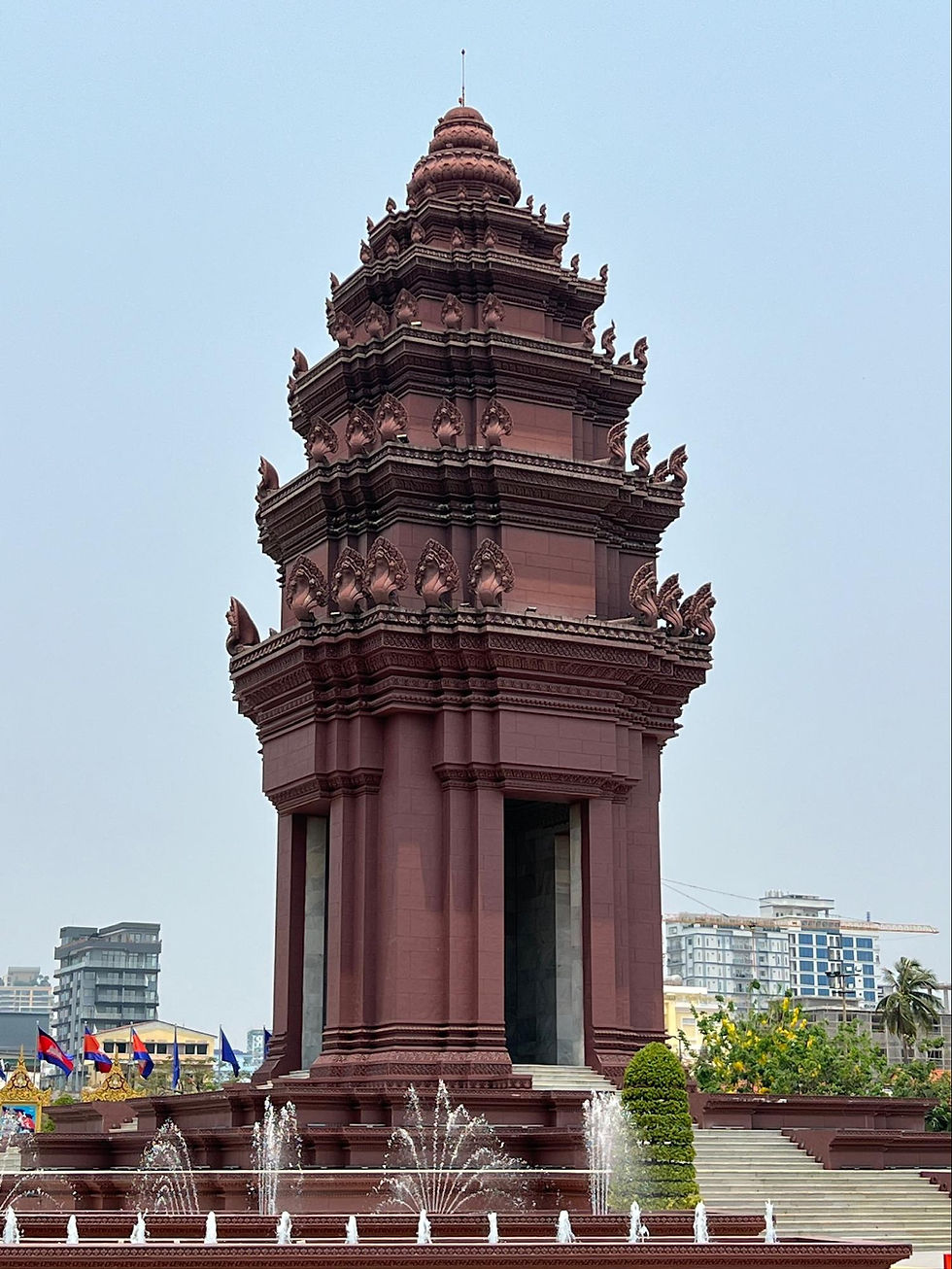
Standing tall at one of the city’s busiest intersections, the Independence Monument feels both symbolic and deeply rooted. Built in 1958 to mark Cambodia’s independence from French rule, it was designed by Vann Molyvann in the shape of a lotus-inspired stupa.
Look closer, and you’ll notice the intricate detailing—100 naga heads rising across its tiers. By day, it stands as a landmark. By night, softly lit, it feels almost ceremonial. It’s here that the country remembers—through wreaths, through silence, through presence.
Conclusion
Phnom Penh stays with you in ways you don’t expect. It’s not just the places you visit, but the contrasts you move through—the quiet of a temple, the weight of its history, the ease of an evening by the river. Nothing feels staged, and that’s what makes it real.
There’s a certain honesty to this city. It doesn’t try to soften its past or exaggerate its present. It simply exists—layered, complex, and deeply human. And somewhere between its chaos and its calm, you begin to see it not as a destination, but as a story still unfolding.
By the time you leave, it’s not the checklist you remember. It’s the feeling of having witnessed something meaningful—something that lingers, quietly, long after the journey ends.


Comments